Lotta uniform - Lottamuseo
information and more about LOTTA_SVÄRD in the
Syvärannan Lottamuseo
Ranatie 39
04310 Tuusula
www.lottamuseo.com
|
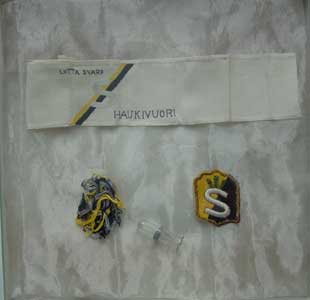
LOTTA-SVÄRD is a Finnish organization established after the
independence of Finland in 1921 and the association was to help boost the nation’s commitment to self-defense and public morale, and to assist the Civil Guard
organization.
In wartime, the Lottas worked at field and military hospitals, on hospital trains and ships, at evacuation
centers for those killed in action, in veterinary, medicine, in catering, at Lotta canteens, in offices and communications, in air surveillance and meteorological services, and in equipment-supply work.
About 300 Lottas died on active service.
Lottas served with the army, the air force and the navy. By the end of the war, there were some 240 000 Lottas.
The Lotta Svärd Organization was disbanded on November 23, 1944, according to the terms of the interim peace treaty. It was not until 1991, fifty years later, and to celebrate the 70th anniversary of the founding of the
Organization that the Lotta Svärd received official government acknowledgement for its important contribution to the war effort.
The name
Lotta Svärd was a fictional character in the poem by the famous Finnish national poet, J.L. Runeberg, which tells about a young Finnish woman whose husband was called to the
colors for the Russo-Finnish war of 1808-09. She insisted on joining him and after his death in battle she remained with the army doing what she could to help the men. Her name was adopted for the Lotta Svärd
Organization.
The symbol
The swastika, Crux Gammata, is already known over 5000 years and many cultures, such as Greek, Egyptian, Indian, African and American as well as being used to decorate, in various forms, church walls from the middle ages. It was also popular in the Viking era.
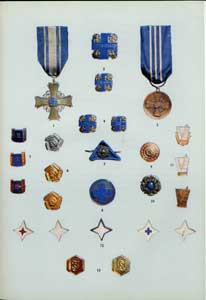
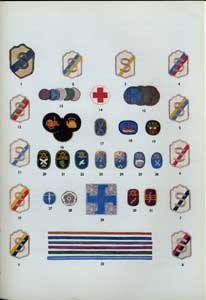
The Lotta Svärd Organization chose as its emblem a blue Finnish swastika on a ground of heraldic silver roses. The swastika as a national emblem was adopted in Finland at the time of independence in 1918 and first appeared on aircraft donated by Count Eric von Rosen, a Swedish aristocrat whose family coat of arms contained the swastika insignia. It was used by the
Defense Forces in various forms up to the end of hostilities in 1944. It was replaced by the still current blue and white roundel seen on military uniforms, aircraft and vehicles today.
information from the website of the
Lottamuseo
|


 ALLAPRIMA MUSEUM